Why is the name Isla so popular? The short answer: it went from nowhere to #34 in barely a decade.
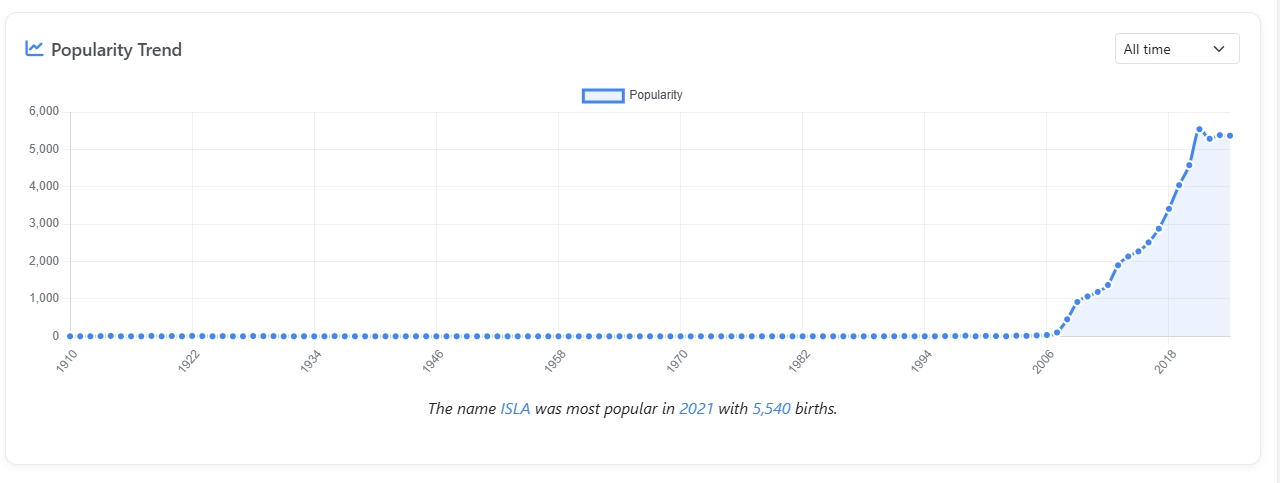
In 2008, Isla was invisible. By 2021, over 5,500 American babies got this name in a single year.
That's not normal growth. That's an explosion.
So what happened? Celebrity influence, Scottish roots, and a perfect storm of naming trends all collided at once. Let's break it down.
The Numbers Tell a Wild Story
In 2008, Isla barely registered on baby name charts. We're talking deep in the top 1000 territory, the kind of ranking where you'd never actually meet one in real life.
Fast forward to 2021? Number 34 nationwide.
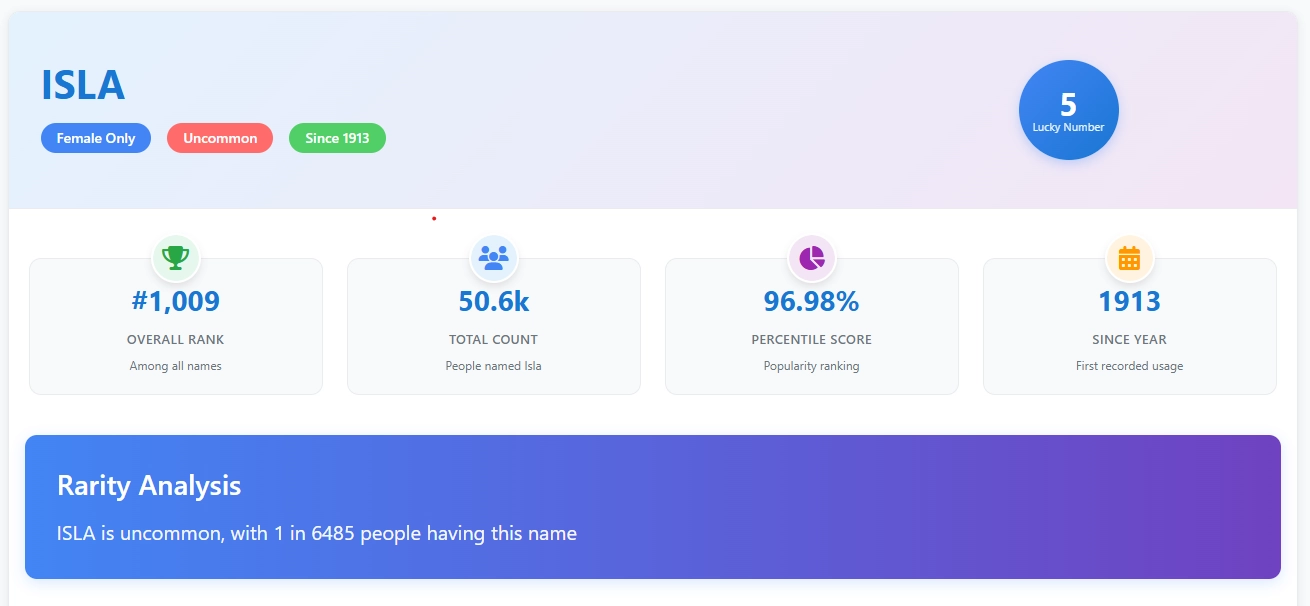
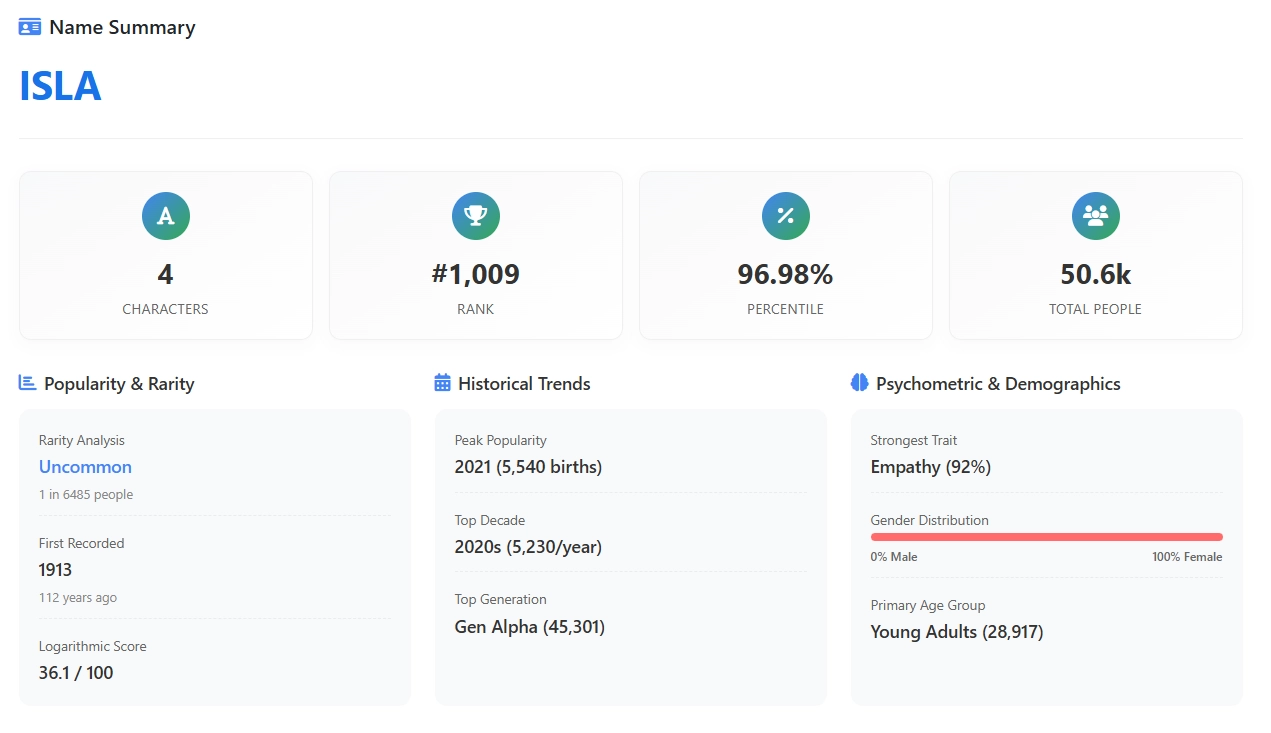
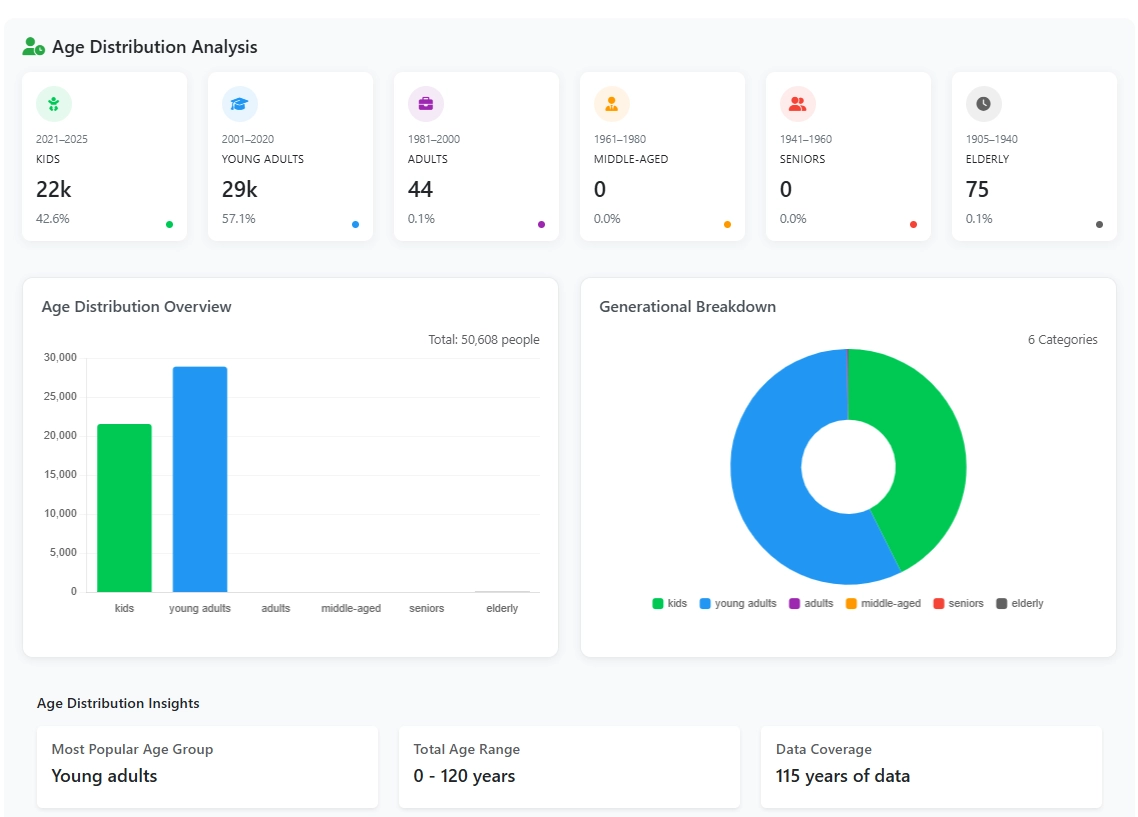
According to the Social Security Administration database (which tracks naming patterns across the US), over 50,608 Americans currently have this name. The really crazy part is that 89.6% of them are Gen Alpha kids—meaning this explosion happened mostly in the last 15 years or so.
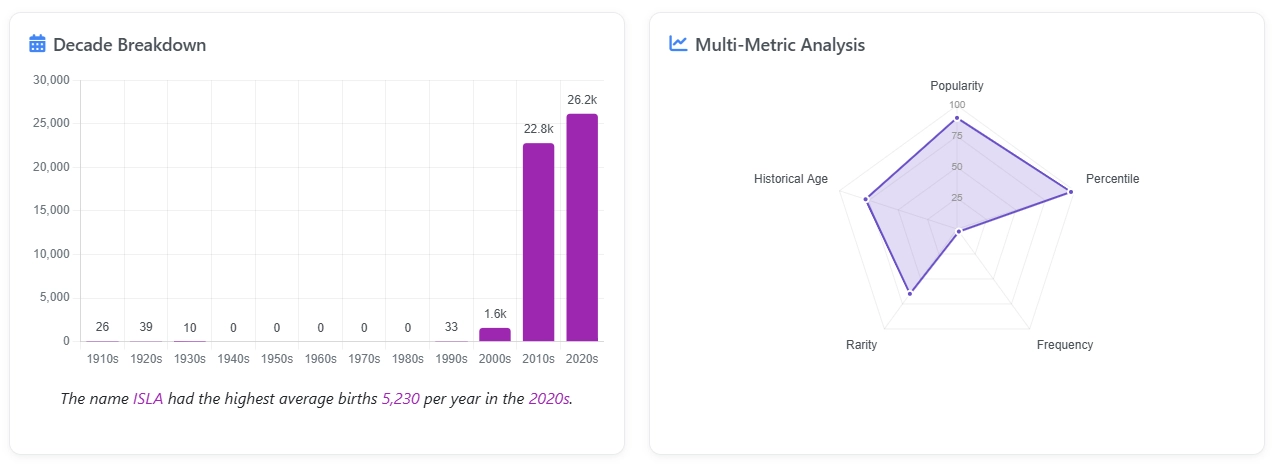
The absolute peak year was 2021 with 5,540 babies. To put that in perspective, between 1940 and 1995, there were entire years where literally zero American babies got named Isla.
Not one.
But Americans Were Actually Late to the Party
While we were sleeping on Isla, other countries had already discovered it.
New Zealand parents made it their #1 (sometime #2 and #3) girl name. Scotland (where it originates) pushed it to #2. Australia went crazy for it in the 2010s. England has it at #4.
Americans took way longer to catch on—probably a solid decade behind the Commonwealth countries. But once we did, the momentum was unstoppable.
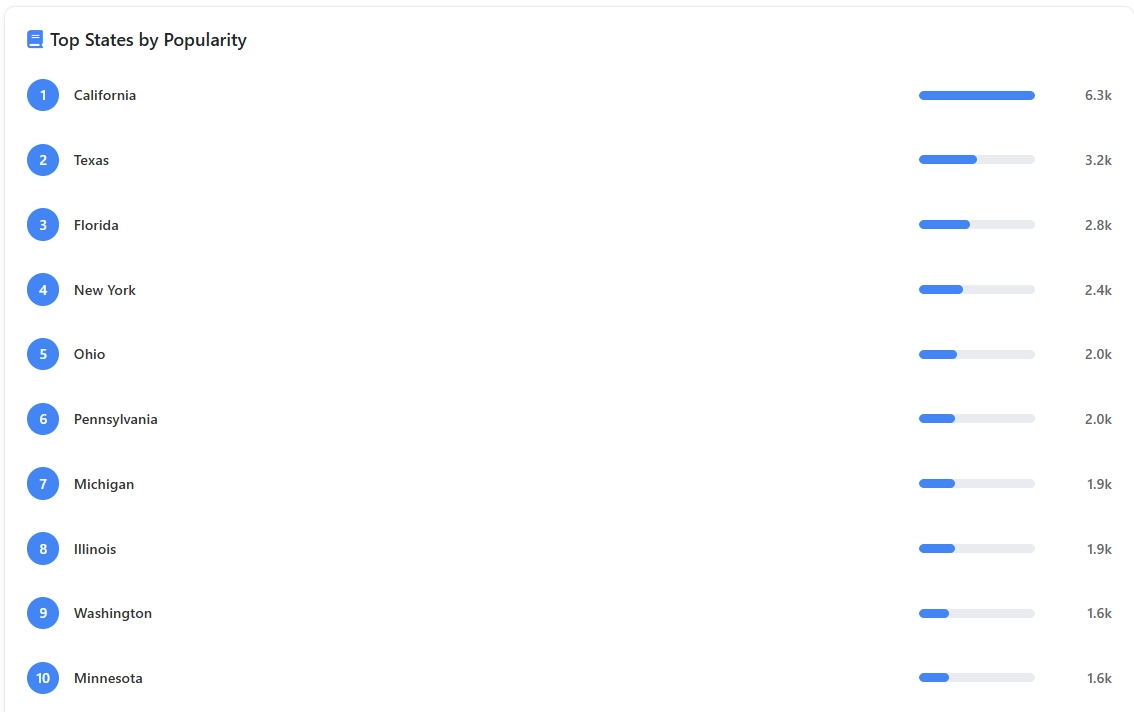
Right now, California leads with 6,300 babies named Isla, followed by Texas (3,200), Florida (2,800), and New York (2,400). Basically the big population centers. Here's Isla's name analysis report—let's explore what it reveals!
Why Is the Name Isla So Popular?
It Just Sounds Nice
Okay, this might sound obvious, but say it out loud: Eye-la.
It flows. There's something smooth about it. Linguists call names like this "vowel-heavy"—think Ava, Emma, Mia. They're built on open sounds that feel warm and approachable.
Isla is literally 50% vowels (I and A), which gives it that melodic quality.

No harsh consonants, no weird clusters where you pause mid-word. Just clean, simple sound.
I think that's honestly a huge reason parents gravitate toward it.
It's pretty without being too flowery.
The Two-Syllable Sweet Spot
Modern parents are practical. You need a name that works on a birth certificate, sounds good when you're yelling it across a playground, and looks professional on a future resume.
Isla handles all of that.
Two syllables hit this perfect middle ground—not abrupt like Jo, not elaborate like Anastasia or Penelope. Just balanced.
Plus, the spelling is straightforward. Four letters, no silent weirdness, no endless variations. Unlike, say, all the different ways people spell Kaitlyn (Caitlin? Katelyn? Katelynn?), Isla stays pretty consistent.
In a world of text messages and Instagram handles, that simplicity matters.
Find Baby Names That Sound Good In English & Spanish
The Island Thing (Which Most People Don't Even Know)
Fun fact: Isla literally means "island" in Spanish.
The name comes from Islay, a Scottish island in the Hebrides. So there's this built-in nature connection—beaches, water, calm vibes.
And nature names are huge right now. Willow, River, Ivy—they're all climbing the charts. But Isla does something clever: it's a nature name that doesn't announce itself. It's subtle. You get the island imagery without being too literal about it.

Some parents specifically choose it for this reason. I've read comments from moms who picked it after tropical honeymoons or because they love beach life. The meaning resonates without being heavy-handed. Find more baby names that work in both English & Spanish.
The Celebrity Factor (It's Not What You Think)
Everyone assumes actress Isla Fisher made this name popular. She's the Australian actress from Wedding Crashers (2005), Confessions of a Shopaholic (2009), Now You See Me (2013).
But here's the thing—I don't think she made it trendy.
I think she made it familiar.
Before Fisher became famous, most Americans had never heard this name pronounced correctly. She introduced it to our ears. Suddenly people were hearing "Eye-la" in movies, on talk shows, in magazine headlines. It stopped being exotic and started feeling accessible.
Parents heard it and thought, "Oh, that's actually pretty usable." She gave permission more than she created demand, if that makes sense.
Then in 2012, Isla Phillips was born—great-granddaughter of Queen Elizabeth II. That added a layer of royal elegance to the name. Royal baby names always influence trends, and this gave Isla something valuable: it felt both modern and established simultaneously.
It Caught a Bigger Wave
Isla didn't rise alone. It rode several major naming trends that were already happening.
The Vowel Revolution
Over the past 20 years, soft vowel-heavy girl's names have dominated. Emma, Olivia, Sophia, Amelia, Mia! they all share this quality. We've collectively shifted away from harder consonant sounds toward more flowing, musical options.
Isla fits right into this pattern.
The "-la" Ending Explosion
Look through any baby name list from the last decade and count how many end in "-la."
Ella. Stella. Bella. Layla. Isabella.
This suffix creates a rhythmic, feminine sound that translates across cultures. Spanish speakers recognize "isla" as island in Spanish. English speakers find it elegant.
It works globally in a way that matters more now than it used to.
Scottish Names Are Having a Moment
Finley, Paisley, Ainsley—Celtic names are everywhere right now.
Isla represents this perfectly. It's authentically Scottish (derived from a real place), but doesn't feel overly ethnic or difficult to pronounce. It honors heritage while staying universally accessible.
The Pronunciation Debate Actually Helped
This might sound weird, but I think the pronunciation confusion actually boosted Isla's popularity.
The correct pronunciation is Eye-la. But lots of people initially try Is-la or Iz-la when they first read it. Spanish speakers sometimes say Ees-la based on their language patterns.
Parents consistently mention this:
"People mess it up the first time, but after one correction they remember forever."
That small challenge made the name feel slightly unexpected. It kept Isla from feeling too mainstream. You have to correct people once, maybe twice, and then they've got it locked in.
It's distinctive without being difficult. That's valuable real estate in the naming world.
Let's generate unique nicknames
Where Isla Dominates (And Where It Doesn't)
New Zealand's #1
Kiwis are absolutely devoted to this name.
Makes sense when you think about it—New Zealand is an island nation. They value nature, simplicity, meaningful names. Isla (meaning island) resonates on a fundamental level there. It's geographically relevant without being too specific.
Perfect for a culture that prizes connection to land and sea.
Scotland's Been on Board Forever
In Scotland, Isla consistently ranks in the top 10. Obviously—it's literally their name from their geography.
The name never fully disappeared there, even during decades when it was completely unknown in America. Scottish parents have loved it continuously.
Americans Were Skeptical at First
We took longer to embrace it. American naming trends typically favor familiar sounds before adopting international imports. We're more conservative initially.
But once we warmed up, we went hard. The data from SSA shows steady thirteen-year growth from 2008 to 2021. That's not a flash trend—that's sustained interest.
The Timeline Is Fascinating
1913-2000: The Ghost Years
Isla first appeared in US records in 1913. But it was essentially invisible for most of the 20th century. Through the 1940s-1990s, most years recorded five to zero births.
It was a secret known only to Scottish families or people with direct Hebrides connections.
2008-2015: The Breakthrough
Then 2008 changed everything. Isla cracked the top 1000 for the first time in modern history.
A perfect storm: Isla Fisher's rising fame, growing interest in Scottish names, the broader vowel-heavy trend. Between 2008 and 2015, it shot upward at incredible speed.
2021: Peak Isla
The 2020s have been golden for this name. It hit 5,540 births in 2021—the highest it's ever been.
What's interesting is it achieved this while still feeling somewhat uncommon. Unlike Emma or Olivia (which saturated every classroom), Isla maintained a lighter touch.
Popular but not overwhelming.
What Parents Say About Choosing It
I've read through hundreds of comments from parents who chose Isla, and certain themes keep appearing.
"I wanted something unique" is probably the most common reason given. The irony is that thousands had the same thought. But because the rise was recent compared to decades-long champions like Jennifer, it still feels fresh.
The nature connection matters. Multiple parents mention choosing it after beach vacations or because they love island life. The meaning resonates without being too literal.
Heritage counts for a lot. Scottish ancestry comes up constantly. Parents appreciate connecting to Celtic roots while choosing something beautiful and wearable.
One mom I read about chose it after her Hawaiian honeymoon. Another specifically wanted a nature name that didn't feel too obvious (she didn't want to name her daughter Ocean or Willow). Several mentioned they'd never known an Isla personally, which made it feel special.
100 Most Popular USA Female Names
Will It Last or Fade?
Every generation has defining names. The 80s had Jennifer and Jessica. The 90s brought Brittany and Ashley. The 2000s launched Emma and Sophia.
Isla will probably always be associated with the 2010s-2020s. In twenty years, people might hear it and think "oh, that's a 2020s name" the same way we recognize Ashley as distinctly 90s.
But I don't think it'll disappear completely.
Names that endure usually have three things: strong meanings, pleasant sounds, and cross-cultural accessibility. Isla checks all three boxes.
According to Namekon's analysis, it ranks more popular than 97% of all other names—that's serious staying power.
Flash trends spike and crash hard (looking at you, Nevaeh). Isla's gradual thirteen-year climb suggests something more durable. It might eventually feel period-specific, but it won't become completely dated.
Think of it as having better longevity than purely trendy choices while not quite reaching timeless status like Elizabeth or Katherine.
Names in the Same Family
If you like Isla but want alternatives, several names share similar appeal.
Ella has that lovely "-la" ending and matching two-syllable structure. Both feel elegant without being fussy.
Mila offers similar vowel-heavy quality and length. Both work internationally.
Ava shares the simplicity and phonetic appeal with a different sound profile.
Ayla deserves special mention because it sounds nearly identical but has different origins (Hebrew/Turkish, meaning "oak tree" and "moonlight"). Some parents specifically choose Ayla because the "Ay" spelling makes the Eye-la pronunciation more obvious.
For slightly longer options, Eliza or Lydia maintain the soft feminine quality while adding syllables.
The key is identifying what you love about Isla specifically—the sound, meaning, or length—then finding names emphasizing those same qualities.
The Psychology Behind It
Short names are winning in modern times. Text messages, social media handles, quick introductions—everything favors brevity. Four letters is genuinely ideal.
Plus, Isla doesn't really have nicknames. Unlike Alexandra (which becomes Alex, Lexi, Sandra, Allie), what you see is what you get. Modern parents appreciate that straightforwardness.
There's also this interesting psychological thing happening: even though Isla might be new to many Americans, the component sounds are familiar. The "Eye" sound appears throughout English. The "la" ending we recognize from dozens of other names.
Psychologists call this "optimal distinctiveness"—the name feels simultaneously special and accessible. Novel yet familiar. Different without being weird.
That balance is rare and valuable. Parents want names serving daughters well from kindergarten through careers. Isla transitions seamlessly from playground to boardroom.
Sophisticated Girl Names With Cute Nicknames
Common Questions
Is Isla rare?
Not really, though it's not oversaturated either. SSA data shows 1 in 6,485 people have this name. It peaked at #34 nationally but remains less common than Emma or Olivia. Still feels relatively fresh in most areas.
What does Isla mean?
It means "island," derived from the Scottish island of Islay in the Hebrides. The baby name meaning evokes natural beauty and oceanic connection.
How do you pronounce it?
Eye-la (rhymes with "my-la"). Many initially try Is-la or Iz-la. Spanish speakers may say Ees-la. One correction usually fixes it permanently.
UK or US popularity?
Way more popular in UK and Commonwealth countries. #3 in England, #2 in Scotland, #1 in New Zealand. Only #34 in the US at its peak.
Good middle names?
Classic options like Grace, Rose, Marie work well. Longer names like Elizabeth, Josephine, or Genevieve balance Isla's brevity nicely.
Is it biblical?
No, it's not in the Bible. Scottish/Spanish geographic origins rather than religious.
Why so trendy?
Perfect storm: celebrity exposure, Scottish name trend, vowel-heavy preference, nature inspiration, ideal length. Hit at exactly the right cultural moment.
Will it date quickly?
Probably associated with 2010s-2020s era, but its classic sound suggests better longevity than flash trends. Namekon shows steady growth over thirteen years rather than spike-and-crash pattern.
Final Thoughts
So Why Is the Name Isla So Popular?
It's not one thing. It's everything coming together at the right moment.
Beautiful sound. Meaningful origin. Celebrity exposure. Alignment with multiple naming trends. Plus genuine parental love for what the name represents.
Isla arrived when parents were ready for something fresh without being bizarre. Meaningful without being heavy-handed. Simple without being boring. A four-letter Scottish gem checking every box.
Based on the trajectory, it's not disappearing anytime soon. This island-inspired name has found solid ground in American culture.
Curious about other baby name trends? Check out Namekon's analysis tool to explore popularity data, meanings, and trends spanning over a century of American naming history.